
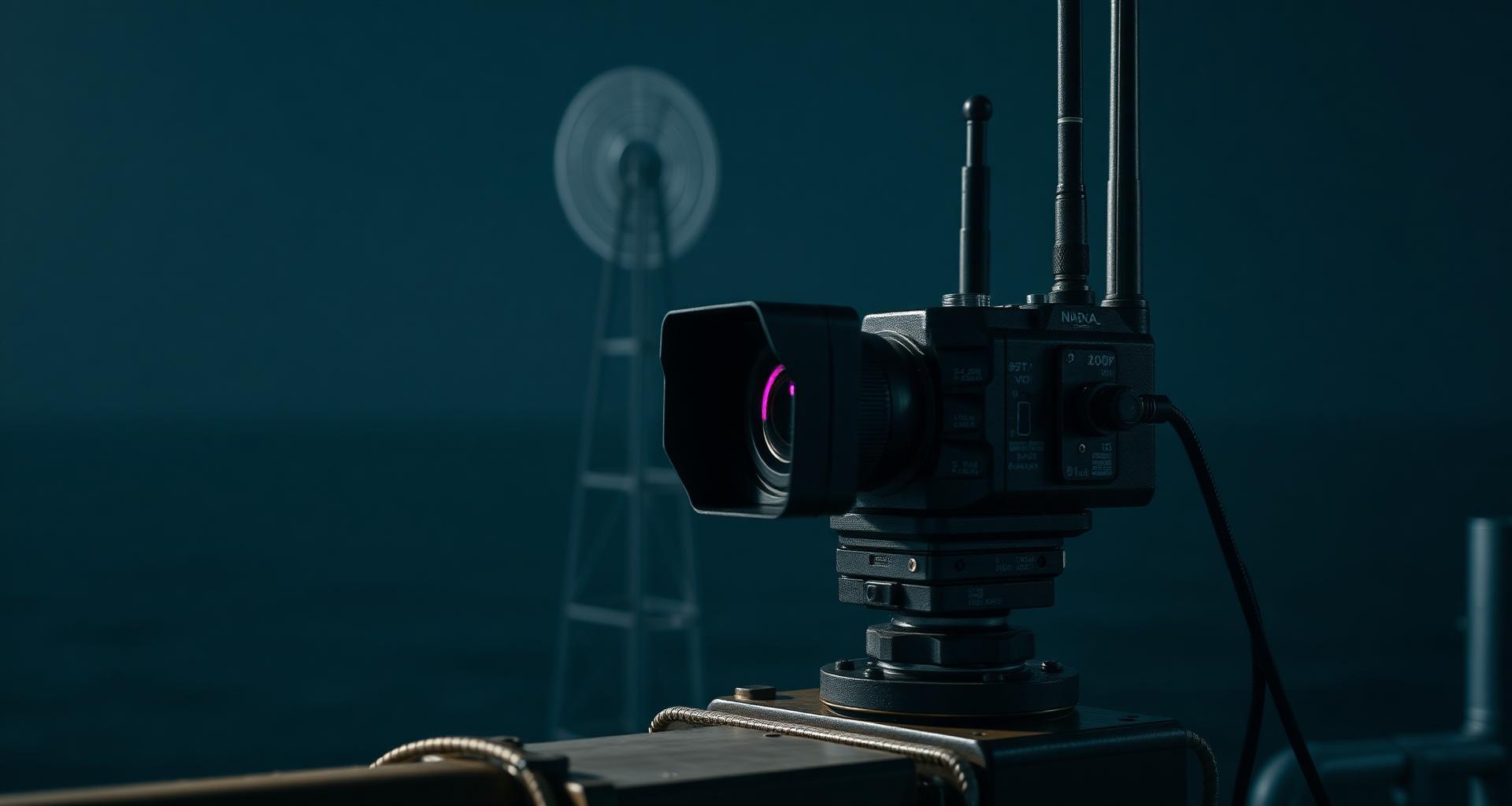
Capability · Wireless A/V
Wireless camera systems for separable fleet equipment.
The wireless camera system designed for fleet configurations where wired cameras simply can't work — piggyback forklifts, crane booms, drop-and-hook trailers, and any setup where the camera location physically separates from the recording unit.
Wireless A/V signal — power still required at the camera location. Built for separable equipment, not consumer Wi-Fi cameras.
Camera coverage where wired connections aren't physically possible.
A wireless A/V camera system addresses a specific physical problem: some camera positions on fleet equipment cannot use wired audio/video connections because the equipment moves, separates, rotates, or detaches in ways that would destroy a cable. Boom trucks have rotating booms that shear cables. Piggyback forklifts physically separate from the host truck for delivery operations. Drop-and-hook trailer operations swap trailers between tractors constantly, making cab-to-trailer wiring impractical.
For these configurations, skEYEvue uses wireless A/V cameras specifically engineered for commercial separable-equipment applications. The camera transmits its audio/video signal wirelessly to a receiver connected to the in-cab recording unit. Power for the camera itself comes from the equipment's own electrical system or a dedicated battery — only the A/V signal is wireless.
This is important: "wireless" here does not mean Wi-Fi-connected consumer cameras. It does not mean "no installation labor." It does not mean the camera runs without power. It specifically means the audio/video transmission is wireless because a wired transmission isn't physically possible given how the equipment operates.
Equipment configurations that require wireless A/V.
Piggyback forklift operations
Moffett-style truck-mounted forklifts that detach from the host truck multiple times per shift. Wired A/V isn't possible because the forklift physically separates from the truck and operates independently. The wireless A/V camera on the forklift transmits to the truck's mDVR when in range.
Crane boom operations
Mobile cranes, boom trucks, knuckle boom cranes — equipment with operating booms that rotate, extend, and articulate through their lifting envelope. A wired A/V cable mounted on the boom would be torn apart by operational motion. Wireless A/V cameras provide boom-mounted visibility for the lifting envelope.
Drop-and-hook trailer operations
Semi truck operations where trailers swap between tractors constantly. Permanent cab-to-trailer wiring isn't operationally viable — every trailer change would require disconnecting and reconnecting cables. Wireless A/V cameras on the trailer transmit to the tractor's mDVR for backing visibility and trailer monitoring.
What the wireless A/V camera system includes.
A wireless A/V camera system has three required components: a wireless camera at the point of visibility need, a power source at that location, and a receiver-equipped recording unit in the cab. Range, signal reliability, and power source vary by application.
At the camera location
- Wireless A/V camera — engineered for the specific operational environment (boom vibration, forklift impact, trailer dust)
- Wireless A/V transmitter — built into or paired with the camera
- Power source — the equipment's existing electrical system OR a dedicated battery installed at the camera location
- Mounting hardware — vibration-resistant brackets appropriate to the equipment
In the truck cab
- skEYE-One mDVR — required (skEYElite hardware does not support wireless A/V cameras)
- Wireless A/V receiver — connected to the mDVR for signal reception
- In-cab monitor (optional) — for real-time visibility from the wireless camera
- Standard truck cameras — front road-facing, rear backing, and side cameras as appropriate
Important: Power vs. signal clarification
Wireless A/V cameras are wireless only in the audio/video signal transmission. Power for the camera itself must come from somewhere — typically the equipment's own electrical system (forklift battery, crane electrical, trailer marker light circuit) or a dedicated battery installation at the camera location. There is no such thing as a "wireless wireless" camera in commercial fleet applications. Consumer Wi-Fi cameras (Ring, Nest, etc.) are not appropriate for these operational environments and are not what skEYEvue offers.
Wireless A/V requires Complete on skEYE-One.
Required package for wireless A/V camera support
Complete (skEYE-One)
The skEYE-One mDVR is the only skEYEvue hardware that supports wireless A/V cameras. The skEYElite hardware (used in Essential, Vision, and Guardian packages) does not include wireless A/V receiver capability. Wireless A/V configurations are always Complete configurations.
Typical configuration
Standard truck cameras (front, rear, sides as needed) + wireless A/V camera at the separable equipment location
Pricing
Base mDVR hardware from $890 · Wireless A/V camera and receiver custom-quoted per configuration · Full configuration custom-quoted per vehicle
Alternative packages — none.
Wireless A/V cameras require the skEYE-One mDVR. There is no alternative package that supports wireless A/V configurations. If your application doesn't actually require a wireless A/V camera (most fleet camera applications use standard wired cameras), Essential, Vision, or Guardian on the skEYElite hardware may be a better fit. Talk to us during your discovery call if you're not sure whether your configuration needs wireless A/V.
Industries that typically deploy wireless A/V cameras.
Moffett Trucks
Piggyback forklift operations require wireless A/V for the detachable forklift.
See industry
Crane Trucks
Boom-mounted cameras require wireless A/V for the rotating/extending boom.
See industry
Semi Trucks
Drop-and-hook trailer operations may use wireless A/V for trailer cameras.
See industry
Heavy Equipment
Some specialty configurations on equipment with separable components.
See industry
What a wireless A/V camera system costs.
Wireless A/V cameras are always part of a Complete configuration on skEYE-One hardware. The base mDVR starts at $890 hardware. The wireless A/V camera, receiver, and any required power source equipment add to that, varying by configuration complexity, environmental requirements, and signal range needs.
A typical Moffett truck configuration (truck cameras + wireless A/V on the forklift) is custom-quoted per vehicle. A typical crane truck configuration with a boom-mounted wireless A/V camera is similarly custom-quoted. Talk to your sales rep during your discovery call for configuration-specific pricing — we don't publish per-camera pricing because it would be misleading given how much configurations vary.
Wireless A/V camera systems, answered.
Spec a wireless A/V camera configuration for your fleet.
Tell us about your equipment — type, operational profile, separation behavior, and visibility requirements. We'll build a configuration tailored to your specific operation.