
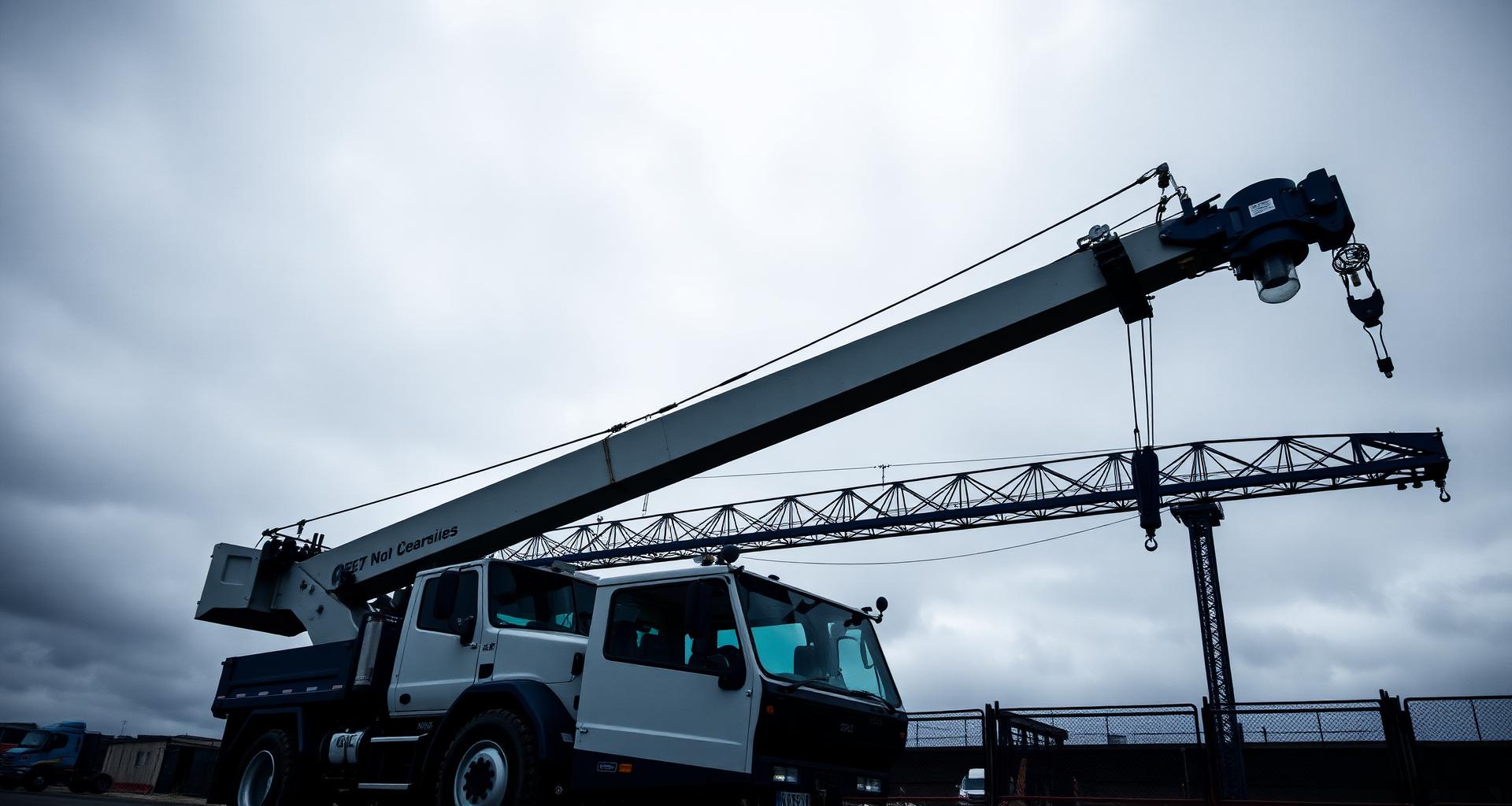
Configuration · Crane Truck
Crane truck camera configurations.
The camera configuration designed for crane operations — multi-angle ground coverage for blind zones and ground crew safety, plus wireless A/V cameras for boom-mounted positions where the operating motion makes wired cameras impossible.
Built for mobile cranes, boom trucks, knuckle boom cranes, and lifting operations of every scale.
Camera coverage that works for crane operations specifically.
A crane truck camera configuration combines two distinct camera types: conventional wired cameras for ground-level coverage of blind zones and ground crew positions, and wireless A/V cameras for boom-mounted positions where wired connections can't survive operational motion.
The boom moves and rotates through a 360-degree operating envelope. A wired A/V cable mounted on the boom would be torn apart by operational motion — physically impossible to maintain. Wireless A/V cameras solve this by transmitting the audio/video signal back to the in-cab recording unit while the camera itself draws power from the crane's electrical system.
The result is camera coverage of the full crane operating environment: ground-level blind zones, ground crew positions, the lifting envelope, and optionally the load itself. Operators see what they couldn't see before. Spotters get repositioned to lower-risk locations. Lift operations get documented for both training and incident review.
Crane operations across scales and configurations.
Mobile crane operations
Self-propelled mobile cranes used in construction, infrastructure, and industrial applications. Camera configurations include cab-mounted ground-level cameras, outrigger-area cameras, and wireless A/V boom cameras for the lifting envelope.
Boom truck operations
Truck-mounted cranes used in utility, service, and specialty industrial applications. Configurations are similar to mobile cranes but adapted to the truck's chassis configuration. Wireless A/V on the boom handles the same operating-motion challenge.
Knuckle boom and articulating cranes
Knuckle boom cranes and other articulating crane configurations have operating motion patterns that benefit specifically from boom-mounted wireless A/V coverage. Multi-segment booms create visibility challenges that ground-level cameras can't fully address.
What the crane truck camera configuration includes.
A crane truck configuration has two components: standard chassis-mounted cameras for ground-level coverage and wireless A/V cameras for boom-mounted positions. Both feed into the skEYE-One mDVR.
Chassis-mounted cameras
- Front road-facing camera — windshield-mounted HD dash cam
- Rear backing camera — for setup and tight site navigation
- Side blind-spot cameras — for transit and outrigger setup
- Outrigger-area cameras — verifying outrigger deployment and ground stability
- AI safety camera (optional) — for driver behavior on transit between sites
Boom-mounted wireless A/V + in cab
- Boom-tip camera — providing operating envelope visibility
- Hook block camera (optional) — for direct load visibility
- Power source — from the crane's electrical system
- Wireless A/V transmitter — paired with the boom-mounted camera
- skEYE-One mDVR + receiver — in-cab recording with wireless A/V receiver capability
- In-cab monitor — multi-camera display for operator visibility
Crane operations require Complete with wireless A/V.
Required package for crane truck operations
Complete (skEYE-One) with wireless A/V
The skEYE-One mDVR is the only skEYEvue hardware that supports wireless A/V cameras — required for boom-mounted positions. Crane operations universally require multi-camera coverage that the skEYElite hardware (Essential, Vision, Guardian) doesn't support.
Typical configuration
Front + rear + 2 side blind-spot + boom-mounted wireless A/V + outrigger area + optional AI safety = 6–7 channels
Pricing
Base mDVR hardware from $890 · Wireless A/V camera and full configuration custom-quoted per vehicle
Alternative packages — none.
Crane operations universally require multi-camera coverage and wireless A/V boom cameras that only Complete on skEYE-One supports. Single-camera and two-camera packages (Essential, Vision, Guardian) on skEYElite hardware are not configured for crane operations. If you operate a smaller boom truck or knuckle boom application that you're not sure requires the full Complete configuration, talk to us during your discovery call.
What a crane truck camera configuration costs.
Crane truck configurations are always Complete configurations on skEYE-One hardware. Base mDVR hardware starts at $890. The wireless A/V boom camera, receiver hardware, mounting equipment for boom mounting, ground-level cameras, and any specialty configuration requirements are quoted per vehicle. Crane configurations vary significantly by crane type, lift operation profile, and operational environment. Talk to your sales rep during your discovery call for configuration-specific pricing.
Crane truck camera configurations, answered.
Spec a crane truck camera configuration.
Tell us about your crane operations — crane types, lift operation profile, ground crew sizes, and current visibility challenges. We'll build configurations including boom-mounted wireless A/V cameras tailored to your specific operations.